

Product Description
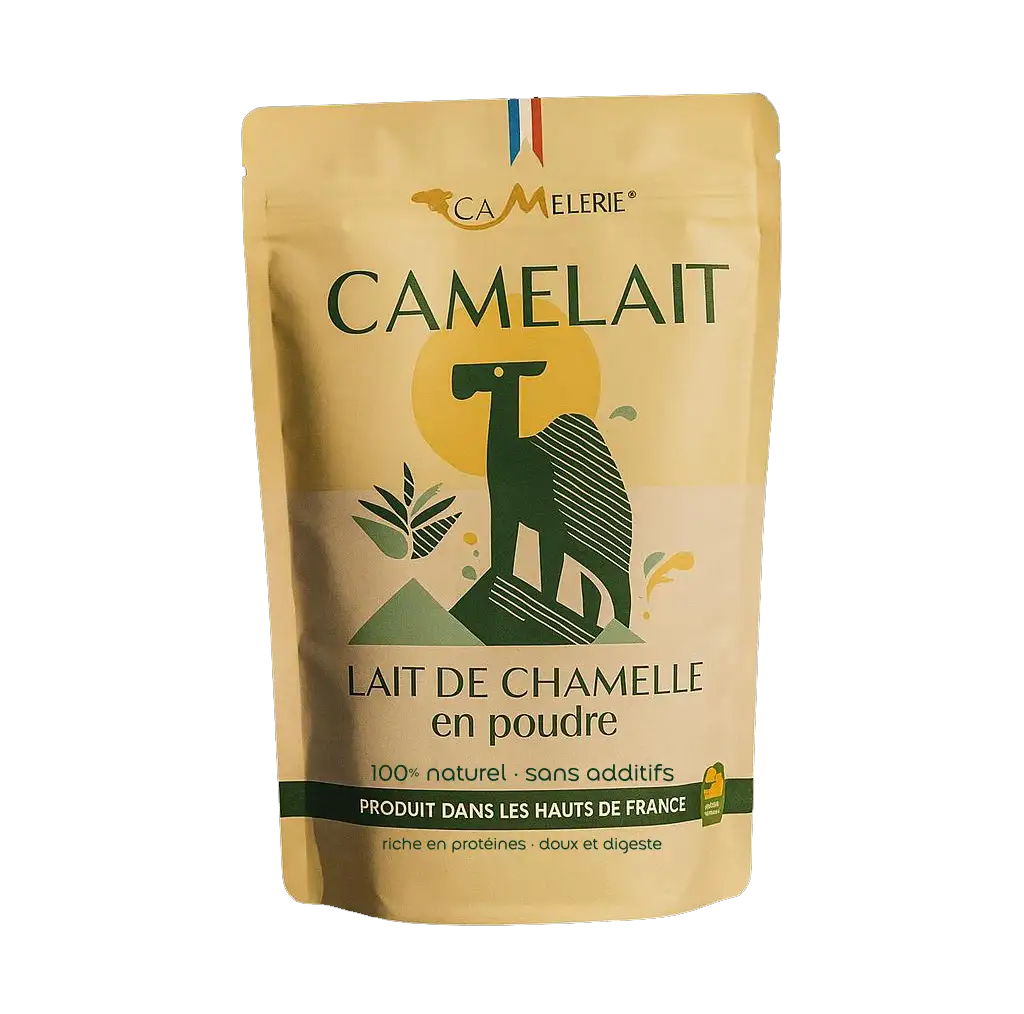
Camel milk powder is presented in a fine, dry, and homogeneous form, suitable for reconstitution with water or direct incorporation into culinary preparations.
It can be used:
-
as a reconstituted milk beverage,
-
as an ingredient in culinary or pastry recipes,
-
as a raw material for specific food applications.
This powdered form allows the use of camel milk without refrigeration, while respecting the storage requirements for a dry product.
Processing Method
The powder is obtained from pasteurized camel milk through a controlled dehydration process (such as spray-drying or gentle drying).
This process aims to:
-
reduce water content,
-
limit microbial growth,
-
facilitate storage and preservation,
-
preserve the general structure of the milk’s nutritional components.
All processing steps are carried out in compliance with good manufacturing practices and the regulatory requirements applicable to food products.
Reconstitution and Usage Instructions
Camel milk powder can be used reconstituted or directly incorporated into culinary preparations.
Indicative Reconstitution
As a guideline, 100 g of camel milk powder yields approximately 1 liter of reconstituted milk, depending on the desired concentration.
For a homogeneous reconstitution:
-
gradually add the powder to potable water,
-
stir until fully dissolved,
-
adjust the amount of water to achieve the desired consistency.
Storage Instructions
-
Store in a dry place, away from heat and light.
-
Reseal the packaging tightly after opening.
-
Avoid exposure to moisture.
-
Respect the “best before” date indicated on the packaging.
General Characteristics & Composition
Camel milk powder naturally contains:
-
proteins,
-
fats,
-
carbohydrates (mainly lactose),
-
vitamins and minerals present in camel milk.
Composition may vary depending on animal diet, lactation stage, and production conditions.
Food Safety and Regulatory Compliance
Camel milk powder is produced, processed, and packaged in compliance with current European Union food safety regulations.
As a food product, it is intended to be consumed as part of a varied and balanced diet, in accordance with standard dietary practices.
Product Positioning
Camel milk powder is offered as a convenient and durable form of camel milk, facilitating its use and storage, without any health claims or specific effect assertions.
👉 For more information on camel milk composition and scientific insights, see our article “What Does Science Say?”
Average Composition – Camel Milk Powder
(Indicative values per 100 g of powder)
| Nutritional Component | Average Value |
|---|---|
| Energy | ~460–500 kcal |
| Proteins | ~24–28 g |
| Fats | ~25–30 g |
| Carbohydrates (lactose) | ~35–40 g |
| Calcium | ~900–1 100 mg |
| Potassium | ~1 200–1 500 mg |
| Phosphorus | ~700–900 mg |
| Iron | ~2–4 mg |
| Vitamin C | ~20–30 mg |
Values are expressed per 100 g of powder. When reconstituted (approximately 100 g powder per 1 liter of water), nutrient contents are proportionally diluted.
Indicative reconstitution: 100 g of powder ≈ 1 liter of reconstituted milk.
The values provided represent averages from scientific literature and available analytical data. They are for informational purposes only and may vary depending on production, processing, and fermentation conditions.
This information does not constitute a nutritional recommendation or health claim.
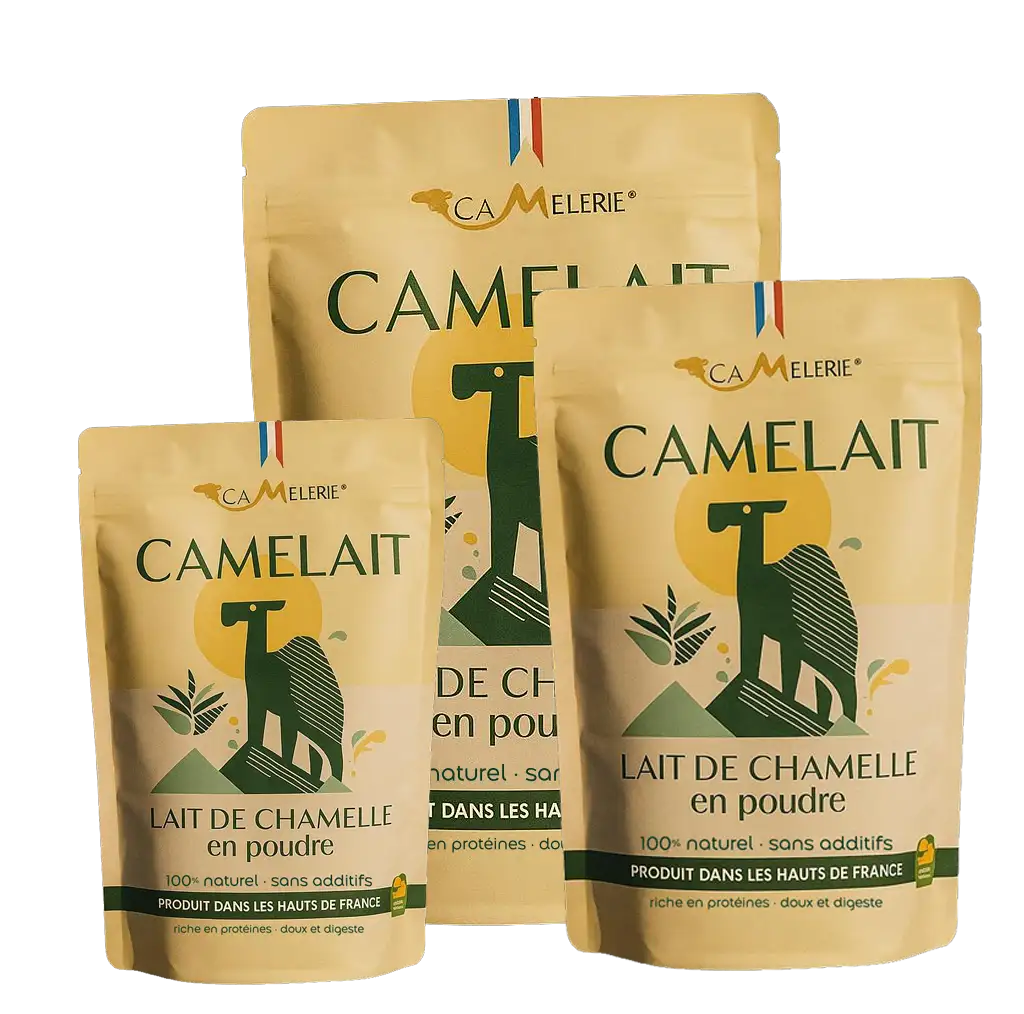
| Poids | ND |
|---|---|
| Paquet de : | 100gr, 200gr, 400gr |